Returns & Refunds
Dropshipping customer service
Set up clear answers, order records, supplier follow-ups and customer updates for a dropshipping store.
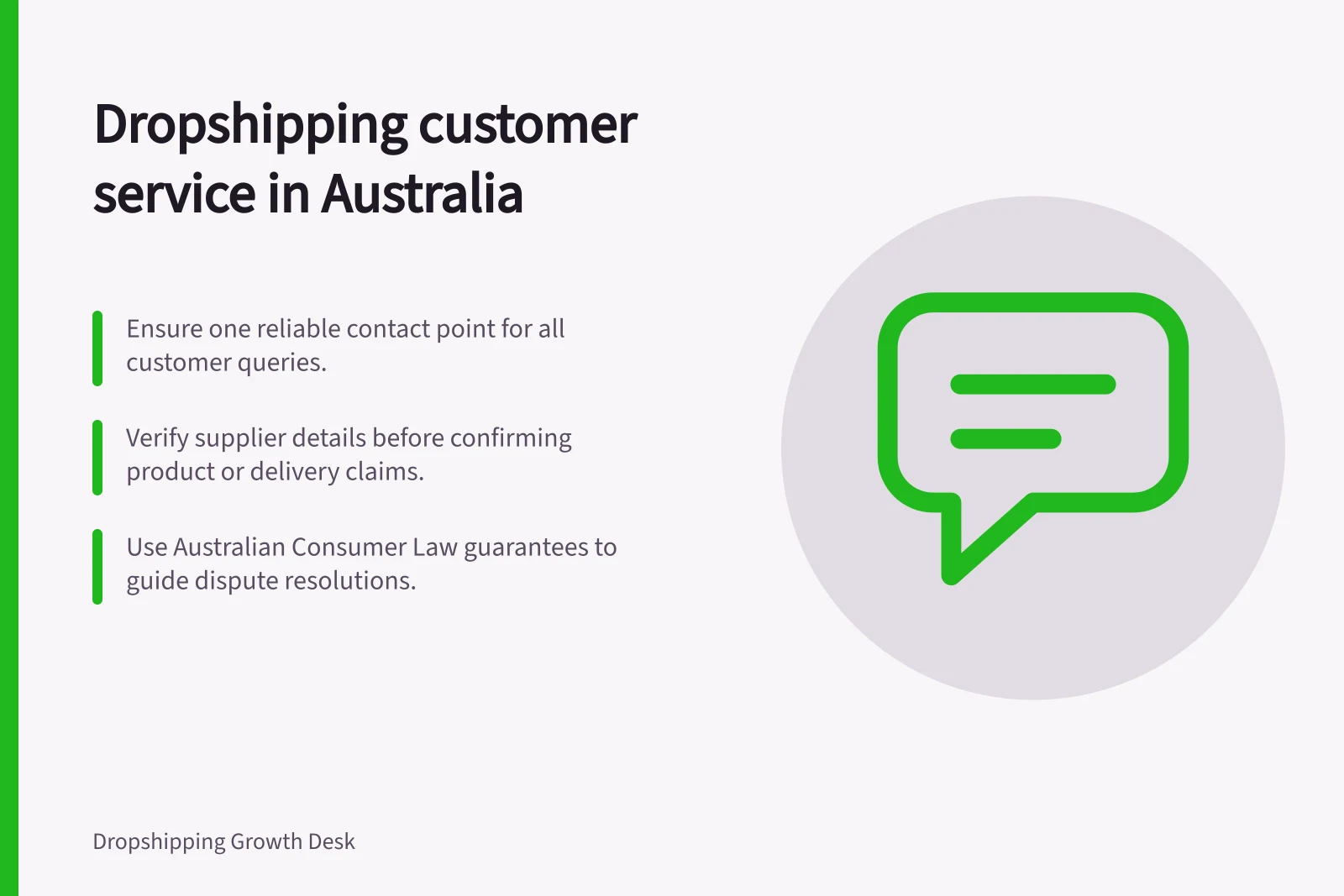
A dropshipping store should give customers one reliable point of contact, even when a supplier holds and dispatches the stock. Good service depends on knowing what has been confirmed, what is still being checked, who owns the next action and when the customer will hear back.
Build a record support can use
Give support staff access to the order, the exact product and variant, the delivery information shown at purchase, supplier acceptance, parcel details and earlier customer messages needed for the case. Record the source and time of each status update.
A store status such as “fulfilled” is not proof of carrier handover without evidence for that step.
Keep the customer’s question separate from the supplier task. The customer may need a delivery decision while the supplier investigates a missing scan. Assign someone to own the customer response and a contact to pursue the supplier answer. Put the next follow-up in the case record.
Answer only what the evidence supports
For product questions, check information for the exact supplier SKU and variant. Confirm dimensions, contents, fit or other decisive details before giving a definite answer. If the supplier has not verified a detail, say what is being checked and when the buyer can expect an update. Do not turn an unconfirmed catalogue description into a promise.
Australian guidance requires businesses to give customers truthful information about goods and services. The ACCC can require businesses to back up claims they make about products or services. The same care applies to stock and delivery claims. If a question reveals a gap that could affect other buyers, correct the listing once the answer is confirmed.
Handle order exceptions as decisions
When an order goes wrong, compare the customer’s report with the order and supplier records. Identify the affected item, what was promised, the latest confirmed event and the decision needed. Request specific evidence from the supplier, such as order acceptance or a dispatch record. Keep the investigation moving without asking the customer to chase it.
A useful customer update says what is confirmed, what remains uncertain, what the store is doing and when the next update will arrive. For a delay, set a time for that next update.
A faulty or misdescribed product may engage Australian consumer guarantees. For a paid-for product that is delayed or not supplied, the ACCC does not resolve individual disputes, so assess the customer’s rights and handle the case directly.
Use consumer guarantees as service criteria
The Australian Consumer Law applies to all businesses selling goods and services in Australia, including businesses based overseas. A store policy cannot override consumer guarantee rights, so a blanket “no refunds” statement is not a sound answer to a customer seeking a remedy.
When assessing a product complaint, check the relevant guarantee rather than treating a manufacturer’s warranty as the only test. Goods must be of acceptable quality, match their description and meet promises about quality or standard; they must also be fit for any purpose stated.
For services, the guarantees include due care and skill, fitness for the stated purpose and supply within a reasonable time when no timeframe was agreed.
If goods or services fail a consumer guarantee, customers may be entitled to a repair, replacement or refund. Assess the issue against those rights rather than narrowing them through store policy.
There is no single guarantee period that applies to every product. Whether a guarantee still applies depends on factors such as the type of good, time since purchase and likely use. It also depends on how long it is reasonable to expect the good to last and the use it could reasonably tolerate before a failure becomes noticeable.
Route complaints to the right place
The ACCC accepts reports about possible breaches and misleading claims, and uses reports to inform its education, compliance and enforcement work. It may investigate and can require businesses to back up product or service claims, but it does not resolve individual disputes or provide legal advice.
For an individual complaint, state and territory consumer protection agencies manage complaints and issues with businesses in their jurisdiction and may offer voluntary dispute services. Courts and tribunals can also enforce the Australian Consumer Law. Make the limits of each pathway clear rather than suggesting that an ACCC report will decide a customer’s case.
Learn from the cases
Tag support cases by product, variant and issue type. Review the number of affected orders alongside total orders for that item and period. Look for repeated uncertainty about fit, misleading imagery, missing components or delivery expectations. Confirm the cause before changing a listing or blaming a supplier.
In this guide
- Answering product questions when the supplier holds the stockCheck the exact supplier item, record verified answers and respond clearly when a product detail remains uncertain.
- Escalating an order problem with a clear evidence recordBuild a precise order evidence record, ask the supplier answerable questions and keep the customer resolution moving.
- Explaining supplier delays without shifting responsibilityGive customers a clear delay update with confirmed facts, a next contact time and realistic options.
- Tracking repeated support issues by productTag support cases by product, compare them with orders and investigate repeat problems before changing a listing or supplier process.