Returns & Refunds
Part of Dropshipping returns and refunds
Comparing local returns with supplier returns
Compare receipt, inspection, freight, timing and customer-cost responsibilities before choosing a return destination.
Choose between a local receiving point and a direct supplier return by comparing the full route for the same item and problem.
Local receipt may help the store inspect and direct the next step. Direct return may avoid handling the item twice. Neither advantage applies until the recipient and process are confirmed.
Compare the same case on both routes
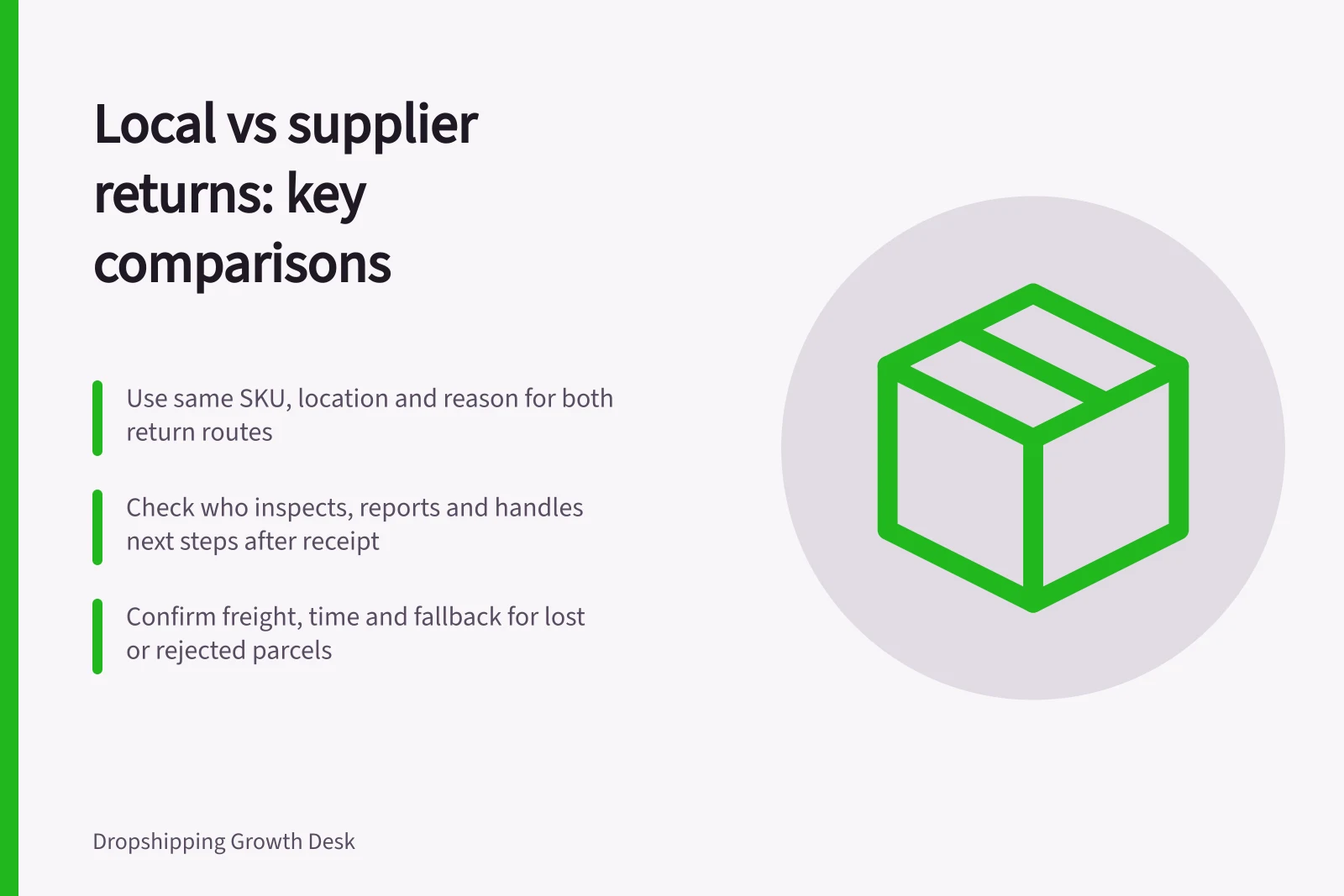
Use an exact SKU, a customer location and a return reason. Ask each proposed recipient whether it accepts the item, how it matches the parcel to an order and what it will report after receipt.
| Question | Local receiving point | Direct supplier return |
|---|---|---|
| First movement | Where can the item be sent or collected? | Can the supplier receive it from the customer’s location? |
| Assessment | Who inspects it and reports to the store? | Who inspects it, and what findings will the store receive? |
| Later movement | Will the item be stored, disposed of or sent onward? | Is another movement needed after inspection? |
| Costs to check | Receipt, storage, inspection and onward freight | Freight, handling and any applicable border charges |
| Time to decide | When can the store obtain an assessment? | When can the supplier provide an assessment? |
Local Receiving Point vs Direct Supplier Return: Key Differences
- First movement
- Where can the item be sent or collected?
- Assessment
- Who inspects it and reports to the store?
- Later movement
- Will the item be stored, disposed of or sent onward?
- Costs to check
- Receipt, storage, inspection and onward freight
- Time to decide
- When can the store obtain an assessment?
Count every leg
For local receipt, include the first shipment or collection, receiving work, inspection, storage and any later shipment. Ask whether the supplier accepts findings from the local assessor or insists on seeing the item. If it requires the item, local receipt may add freight rather than replace it.
For a direct supplier return, confirm the address, authorisation, tracking and instructions needed for a cross-border parcel, where relevant. Find out who handles an unclaimed or rejected parcel. A supplier’s original delivery charge is not a return-freight quote.
Compare the time to a customer decision separately from the time to a supplier credit. Supplier-return outcomes can include a credit, replacement, repair or rejection, so the supplier’s decision may differ from the store’s customer-facing decision.
Key Metrics to Track in Return Route Performance
- Freight costs (local receipt)
- Includes collection, storage, inspection and onward shipment
- Freight costs (direct supplier)
- Includes cross-border charges, handling and authorisation fees
- Assessment time (local)
- Time from receipt to store decision
- Assessment time (supplier)
- Time from supplier receipt to credit/replacement decision
Keep customer obligations separate from route choice
A route comparison does not determine the customer’s rights or the store’s obligations. The ACCC educates consumers about consumer guarantees and accepts reports about possible business conduct, but it does not resolve individual disputes or give legal advice.
For change-of-mind returns, compare the physical route under the store’s offered process. Keep that operational comparison separate from any question about applicable rights.
Choose a route and fallback
A local point may suit an item needing physical inspection and several possible outcomes, if someone can receive and manage it. A direct supplier return may suit an item the supplier has agreed to inspect itself. Record the recipient, parcel reference, assessment step, cost owner and fallback for a rejected or lost parcel.
The answer may differ by SKU and return reason. After launch, review actual freight, assessment time, second shipments and credits. Choose the confirmed route that meets the item’s inspection needs and accounts for those factors.
Steps to Compare Return Routes for Dropshipping Businesses
- Use a consistent SKU, customer location and return reason
- Confirm whether each recipient accepts the item
- Verify how the parcel is matched to an order
- Determine who inspects the item and what findings are reported
- Record recipient, parcel reference, assessment step, cost owner and fallback