Returns & Refunds
Part of Moving beyond a single dropshipping supplier
Planning a supplier exit without abandoning existing orders
Set a supplier cut-off, reconcile each open order line and give Australian customers a clear outcome during a dropshipping exit.
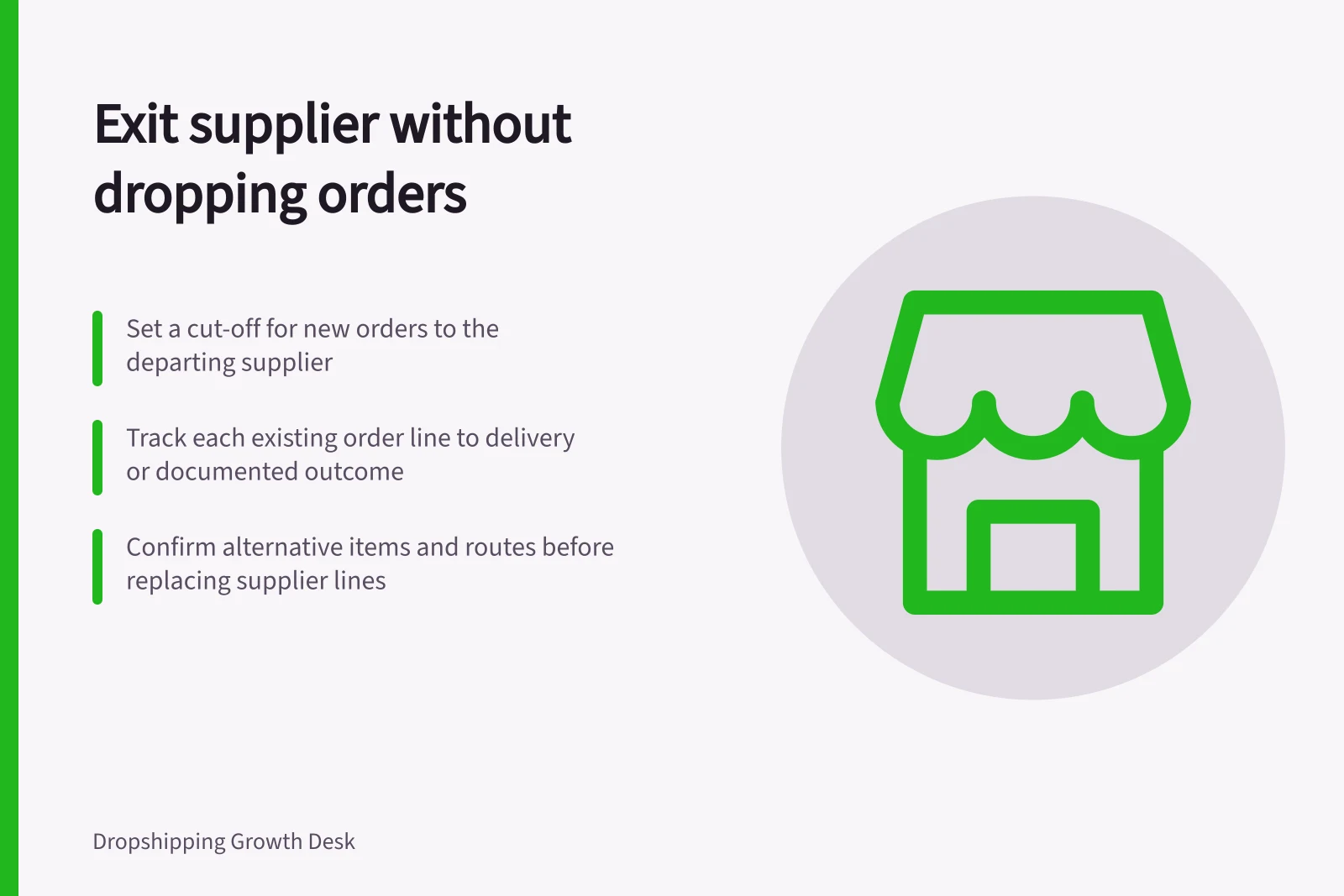
Set a cut-off for new orders to a departing supplier, then manage each existing order line to delivery or another documented customer outcome. Ending the supplier relationship does not cancel a customer's order with the store. Track what the supplier still owes the store and what the store still owes each buyer.
Identify affected orders
Record when new orders will stop going to the supplier. Check the store, connector and manual ordering process so no later order slips through. Pause affected offers or revise them only after another source and its product and delivery information have been approved.
Make an open-order register at line level. Include the customer and supplier references, exact variant and quantity, payment and submission state, supplier response, parcel assignment, last confirmed event, original delivery information, next action and owner. Include unresolved returns, refunds and supplier credits even when the parcel was delivered. Preserve the messages and terms needed to settle those cases.
Sort orders by confirmed state
State at cut-off / Immediate decision
- Paid by customer, not sent to supplier
- Check an approved fulfilment option or customer solution.
- Sent, no clear supplier response
- Establish whether an order exists before placing it elsewhere.
- Accepted, not handed to carrier
- Confirm whether and when the supplier will complete it.
- Partly dispatched or in transit
- Keep each parcel and outstanding line visible.
- Customer problem open
- Assess the customer outcome while pursuing the supplier claim separately.
A portal acknowledgement may mean only that a request arrived. A tracking number may exist before carrier handover. Do not duplicate an order because its status is uncertain.
Obtain a close-out position
Ask the supplier to identify which order references it will fulfil, which it cannot fulfil, the last date for corrections or cancellations, how it will provide tracking and who will handle later claims. Check the actual agreement for open-order, payment, return and credit terms. Record its response against each line; a general assurance is hard to reconcile with a partly fulfilled basket.
If a line cannot be completed, confirm the exact alternative item and route before proposing it. Do not silently substitute a different product. Give a buyer who has paid a timely update based on confirmed facts and assess an appropriate solution.
The ACCC educates consumers and businesses about their rights and responsibilities under consumer law and accepts reports where people consider a business is doing something it shouldn't. It does not resolve individual disputes about a failure to supply or delayed supply. If a business breaks the rules about accepting payment without intending to supply, the ACCC can investigate and may take compliance or enforcement action.
Keep the customer case with the store
Tell affected buyers what is confirmed, what is being checked and when the next update will come. Assess the store's customer obligations without waiting for a supplier refund or credit. If a supplied product has a consumer guarantee problem, the selling business is responsible for resolving it; the remedy depends on the facts.
Track the customer refund, replacement or delivery outcome separately from the supplier invoice, credit or dispute. A requested credit remains pending. Keep old order records accessible to authorised staff until cases are finished, including after a supplier portal or connection closes.
Key Compliance & Consumer Rights Facts (Australia)
- ACCC's role in consumer protectionEducates businesses and consumers; does not resolve individual disputes
- Business responsibility for consumer guaranteesEven if a supplier fails, the selling business must resolve issues like defects or non-delivery
- False or misleading claims riskAccepting payment without intent to supply may breach consumer law
Close each line
Reconcile the register with customer orders, supplier responses, carrier events and financial records. Close a line when its delivery or other customer outcome is recorded and no next action is hidden in the old supplier system. Assign an owner and follow-up date to each exception remaining after the commercial cut-off.