Order Flow
Part of Dropshipping shipping and delivery
Investigating tracking that has not updated: checks
Investigate static parcel tracking by checking label creation, handover evidence, carrier mapping and customer commitments.
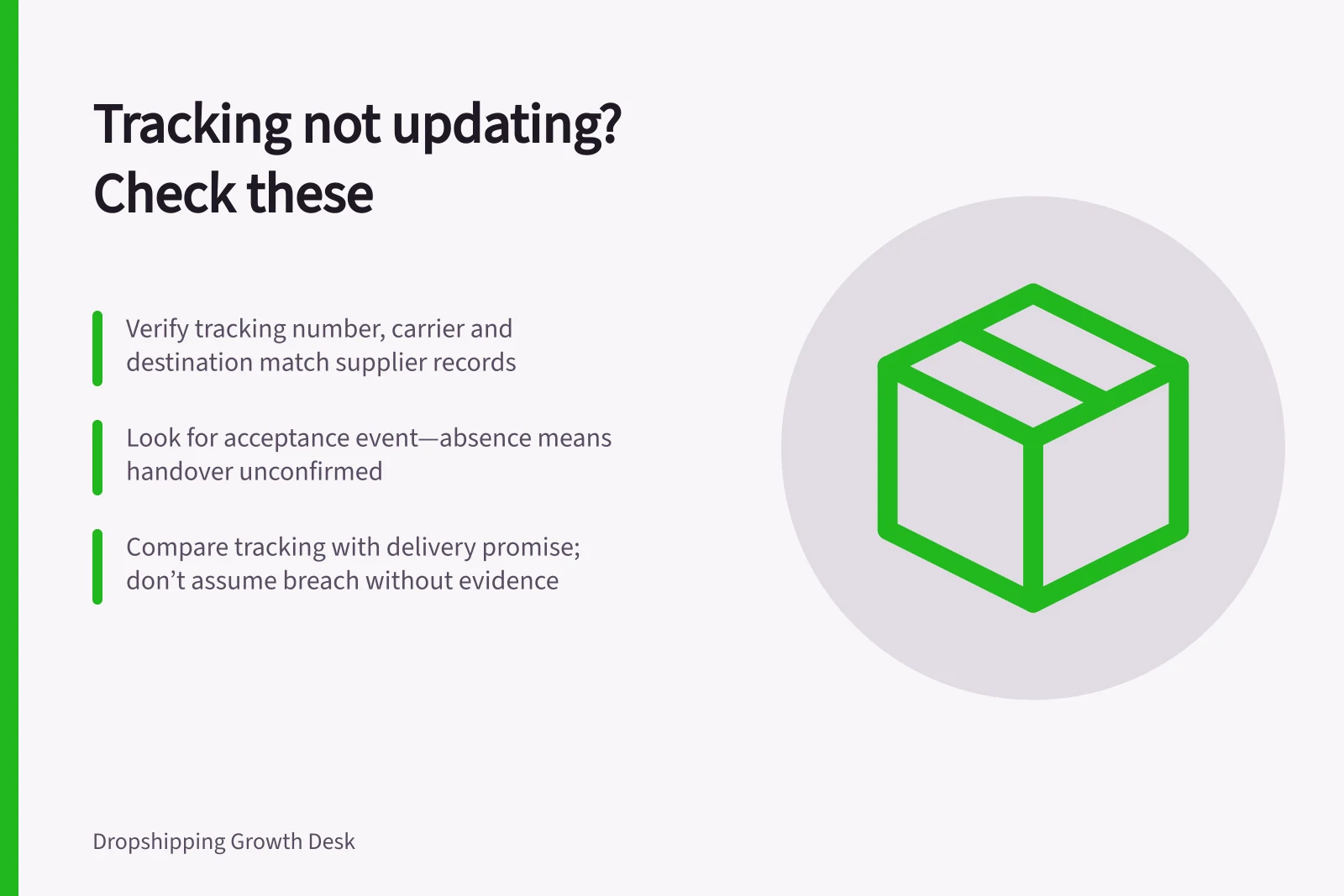
Check whether the tracking number, carrier and destination match; whether an acceptance event is recorded; and whether later scans have stopped. These checks point to bad reference data, unconfirmed handover or a gap after acceptance. A fulfilled status in the store is not itself a carrier scan.
Verify the reference first
Compare the tracking number, carrier name and destination shown in the store with the supplier’s dispatch record and the carrier’s page. If the number is not recognised, or the carrier or destination does not match, treat the reference as unverified and ask the supplier to confirm it; a tracking number alone does not prove handover.
If you are unsure which carrier to check, 17TRACK can auto-detect a carrier and aggregate tracking events. Verify the result against the identified carrier’s page.
If the label, seller or tracking result names DpdEx, check its official website, dpdex.cn, if a tracking input is available, or use 17TRACK to identify and aggregate events. Public service-level information is limited, so verify any destination partner from the live tracking result rather than assuming DpdEx controls the final delivery scan.
Look for an acceptance event. If there is none, handover is unconfirmed: ask the supplier for handover evidence and the expected collection date. The absence of an acceptance scan does not by itself prove the parcel was never handed over.
If acceptance is present but there are no later events, the parcel has a recorded handover and the gap is in subsequent tracking. Check the carrier’s service guidance for when an enquiry is eligible; the tracking events themselves do not show that threshold. When eligible, open an enquiry and note the date and any response time given.
Key Tracking Investigation Metrics
- Unverified tracking references
- Check against supplier dispatch and carrier pages
- Missing acceptance events
- Require handover evidence from supplier
- No scans after acceptance
- Check carrier’s enquiry eligibility timeline
Decide using the delivery promise
Compare the tracking evidence with the delivery commitment shown at purchase. A tracking gap alone does not establish that the commitment has been missed; if the parcel is delayed or the commitment cannot be met, tell the customer what is confirmed, what you are checking and when you will report back.
Record the enquiry date and any response you have been promised, then update the customer at that time. If the parcel is lost or the commitment cannot be met, provide an appropriate remedy rather than treating the tracking number as resolution.
The ACCC accepts reports about businesses consumers consider to be doing something they should not, and uses reports to inform its education, compliance and enforcement work. If a business breaks rules about accepting payment without intending to supply, the ACCC can investigate and may take compliance or enforcement action. It does not resolve individual disputes about failed or delayed supply.
Tracking Status vs Delivery Commitment
- Tracking gap present but within delivery promise window
- Continue monitoring; inform customer of status
- Tracking gap exceeds delivery promise window
- Initiate remedy process; provide update by promised date
- No acceptance scan recorded
- Request handover proof; do not assume non-handover
- Carrier enquiry eligible but no response
- Follow up using carrier’s support; document dates