Order Flow
Part of Dropshipping supplier agreements
Defining dispatch and tracking expectations
Specify dispatch timing, carrier handover evidence, parcel tracking fields and escalation steps in a dropshipping supplier agreement.
Agree separately on when the supplier will process an accepted order, hand each parcel to a carrier and send tracking details. A label or tracking number alone does not prove carrier handover. Define events the supplier can evidence and your team can use in customer updates.
Define the clock
Start the dispatch clock at an event both parties can identify, such as acceptance of a complete order request. State the time zone and how cut-offs, weekends, public holidays, address queries and unavailable stock affect the target. Establish whether a quoted handling window ends at packing, label creation, carrier collection or another step.
Record the products, dispatch locations and destinations to which each window applies. Ask how the supplier will report an exception before the target passes, including what it can say about a revised estimate and who will answer follow-up questions.
These are supplier-side terms; an arrival estimate also depends on transit and other steps.
Specify the parcel record
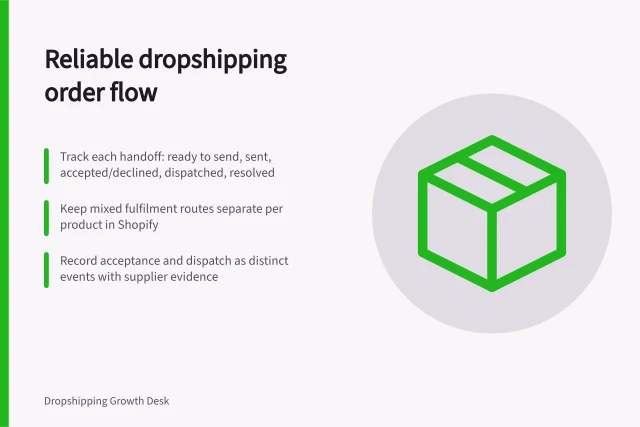
For each parcel, ask for the store and supplier order references, the items and quantities inside, carrier and service, tracking reference, and the time and source of each update. For a split order, require a separate parcel record so one tracking number is not mistaken for the whole order.
Distinguish at least two events:
- Label or shipment record created:shipping information has been prepared.
- Carrier handover confirmed:the parcel has been accepted or collected under the relevant carrier process.
Australia Post’s Parcel Send process distinguishes despatching a manifest, which confirms parcels are ready to be sent, from acceptance at a lodgement facility after parcels are checked against that manifest. This is an Australia Post example, not a definition of another carrier’s statuses. Ask what evidence the supplier can provide for each service it uses.
Supplier vs. Carrier Events in Parcel Handling
- Label or shipment record created
- Shipping information has been prepared; not yet handed to carrier.
- Carrier handover confirmed
- Parcel accepted or collected by carrier under their process; evidence required.
Set a route for missing updates
Agree who investigates a missed handover or an unmatched tracking reference, which packing or carrier records they will check, and when your team will receive another update. Keep the affected order open until its position is known or resolved.
If the supplier cannot meet a target, ask for the affected item and order reference, last confirmed step, reason if known, supported revised estimate and next response time. Your team can then describe what is confirmed without presenting an unverified parcel as in transit.
A controlled order may help check how those messages appear, but it shows the process for that order only. Revisit the definitions when the supplier changes its warehouse, carrier or ordering system.