Order Flow
Part of Dropshipping shipping and delivery
Showing realistic delivery estimates before purchase
Show delivery timing before checkout using supplier processing, transit and stock-origin information that can be kept current.
A supplier’s “ships in two days” may mean a label is created after processing, not that the parcel has reached a carrier or arrived at an Australian address. Build the customer-facing estimate from the order’s actual fulfilment stages, not from a dispatch claim alone.
Use completed order records to set a delivery range, then keep it current as stock locations, suppliers and carrier services change. If reliable handover information is missing, do not publish a precise arrival day.
Calculate the range from real steps
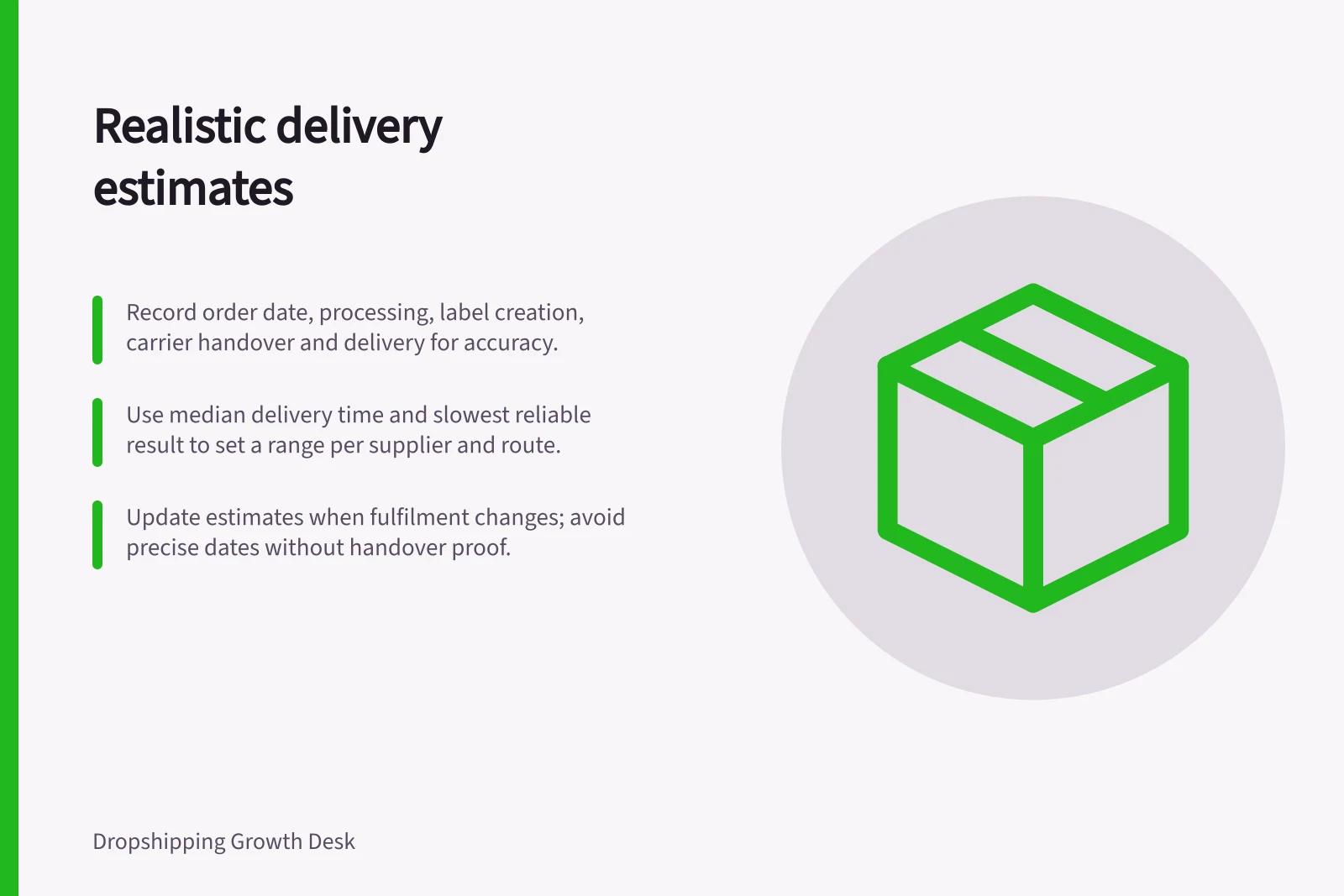
Record the customer’s order date, supplier processing, label creation, physical carrier handover and final delivery. For international orders, record export or import processing and customs stages where they apply. A label date is not proof that the carrier has received the parcel.
Group completed orders by supplier, stock origin, destination and carrier service. DHL, FedEx and UPS are examples of international carriers; use records for the service and route actually used rather than treating a carrier name as a transit-time estimate.
For each group, calculate elapsed time from customer order to delivery. Use the median completed delivery time as the typical point and the slowest recent result with trustworthy handover evidence as the cautious end of the range. Keep the same day-count convention throughout, and refresh the calculation as new deliveries arrive.
Use the stage dates to identify where time varies, including supplier handling, carrier transit and any international handover. Account for weekends or local public holidays when they affect dispatch; do not add a guessed safety buffer. If the supplier cannot provide reliable handover information, avoid presenting a precise date.
Show the range near the product and cart decision, and repeat it at checkout. State where the stock ships from and whether the estimate is in calendar or business days. If different products ship from different origins, explain that more than one delivery date may apply when that is genuinely possible.
The ACCC says it educates businesses and consumers about their rights and responsibilities under consumer law. It can investigate and may take compliance or enforcement action if a business breaks the rules about accepting payment without intending to supply; it does not resolve individual disputes about failed or delayed supply.
Key Compliance and Performance Metrics
- ACCC Responsibility
- Educates businesses and consumers about consumer law; investigates non-compliance
- Delivery Accuracy Requirement
- Do not publish precise arrival day if reliable handover information is missing
- Data Refresh Frequency
- Update delivery ranges as new deliveries arrive with verified handover dates
Keep the promise maintained
Assign someone to review estimates when fulfilment locations, carrier services or stock patterns change. Compare actual order-to-delivery times with the published range by supplier and destination, and exclude orders without trustworthy handover evidence from an on-time claim.
If a product consistently misses its estimate, revise the range or pause the listing while you resolve the cause. If a delay changes the expected timing, update the estimate and explain the available options if you cannot supply on time.