Pricing & Margins
Part of Dropshipping supplier agreements
Recording changes to supplier pricing and terms
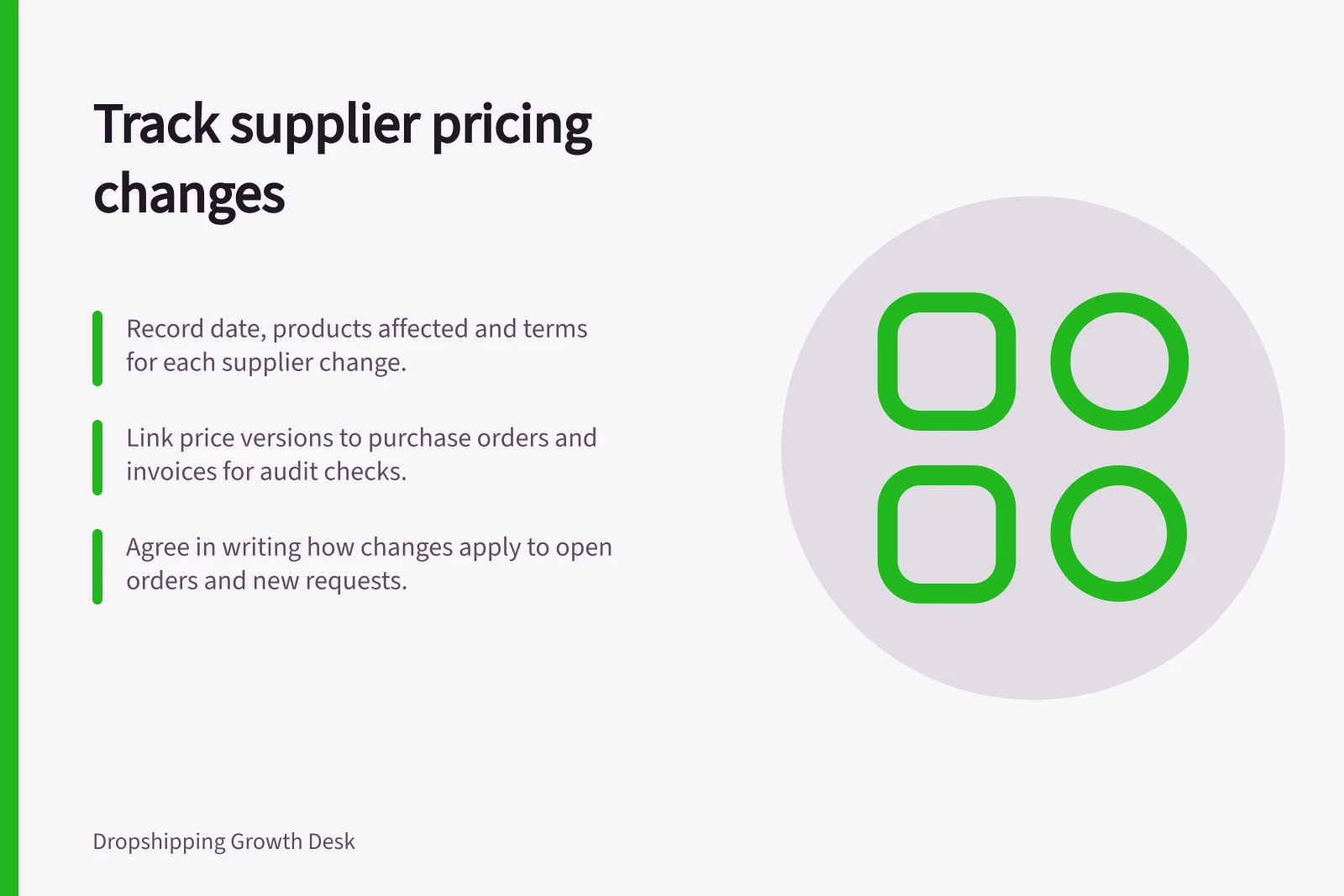
Track supplier price versions, notice, agreement, effective dates and open-order rules so invoices and listings use the right terms.
Keep a dated record of each proposed or effective supplier change, the products it affects and the terms governing orders already placed. A new catalogue file or web page may alert you to a change.
Record what the supplier agreement says about when a change applies. The file alone does not explain which price applies to an accepted order.
Give each price a defined scope
For each supplier item, record the item price and any packing, order, handling and freight charges separately. Add the currency, relevant GST treatment, destination or service conditions, and the date or event from which the version applies. A small change to the headline price can conceal a larger change to the full order charge.
Keep the supplier’s notice or price schedule and your store’s response. Link the applicable version to purchase orders and invoices so an invoice can be checked against the terms for that order rather than today’s catalogue.
Agree how changes take effect
The supplier arrangement should answer four questions:
- Notice:How and to whom is a proposed change sent?
- Response:Which changes require express agreement, and what counts as acceptance under the existing terms?
- Timing:Does a new term apply to requests sent, orders accepted or goods dispatched after its effective time?
- Open orders:Which version governs accepted or partly dispatched orders?
Record the time zone if an effective time could fall on different local dates. If a notice changes a specification, packing instruction or dispatch location as well as price, record each change separately so the right customer-facing information can be reviewed.
How to manage supplier price and term changes
- NoticeHow and to whom is a proposed change communicated?
- ResponseWhich changes require express agreement? What counts as acceptance under existing terms?
- TimingDoes the new term apply to requests, accepted orders, or goods dispatched after the effective time?
- Open ordersWhich version governs accepted or partly dispatched orders?
Use the record
A compact register can show the notice received, old and proposed terms, affected products and routes, response status, effective date and person responsible. Keep a proposal marked as pending until the required process is complete. Retain superseded versions for invoice and dispute checks while making the current terms easy to find.
Before a supplier change takes effect, review affected listings and offers against the new total supplier charge. Check separately whether a customer price or delivery claim needs updating. A supplier price change does not, by itself, change the amount already agreed with a customer; assess the customer transaction and its terms.
After the effective date, compare supplier invoices with the versions assigned to those orders. Investigate mismatches using the notice, response record and order references. If a change cannot be agreed or makes the offer unworkable, decide how to handle new orders and apply the recorded open-order rule.
Key records to maintain for supplier pricing changes
- Supplier notice or price scheduleRetain the original communication from the supplier
- Store’s response to the changeDocument your acceptance or rejection of the proposed change
- Effective date and time zoneRecord the exact time and time zone for when the change takes effect
- Link to purchase orders and invoicesEnsure each order references the correct price version
- Superseded versionsKeep old terms for audit, dispute resolution and invoice verification
Timeline of supplier pricing change management
- Notice received
- Date and method of receiving supplier notification
- Review and response
- Time taken to assess and respond to the change
- Effective date
- When the new terms officially apply
- Invoice comparison
- After effective date: verify invoices against assigned terms