Supplier Finding
Part of Finding dropshipping suppliers
Evaluating supplier communication with a test order
Plan a dropshipping test order to check supplier answers, acceptance, dispatch updates and exception handling.
A test order can reveal whether a prospective supplier gives your store usable answers before, during and after fulfilment. Choose an ordinary product, use your team's usual contact route and record when each answer arrives. One order shows how that case was handled; it cannot establish usual performance.
Set up the questions
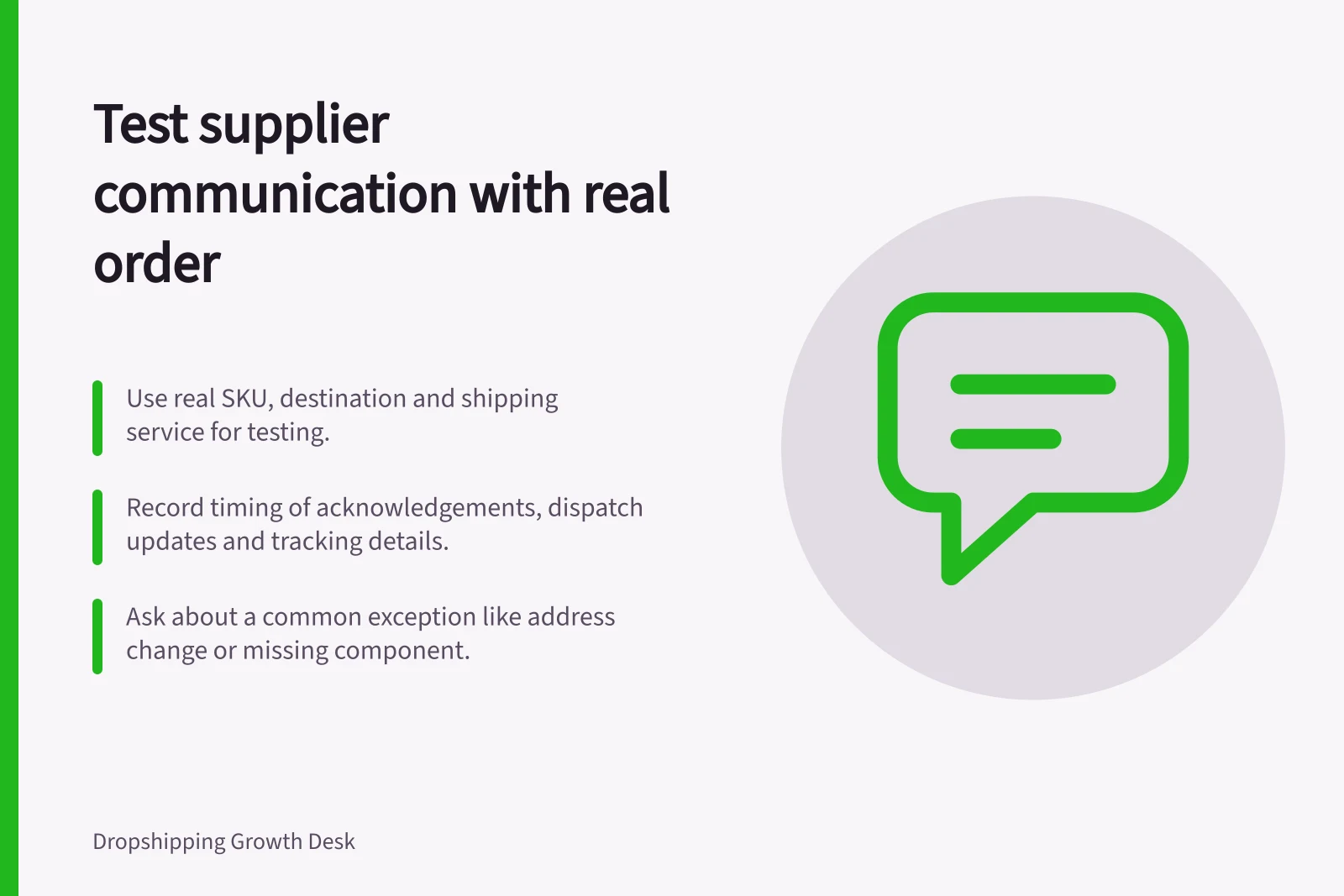
Pick the exact SKU and variant you may list, a realistic Australian destination and a normal shipping service. Before ordering, ask whether that variant is available for the destination, what is included, when the order will be accepted or rejected, and how your team will learn the parcel has been handed to a carrier.
Note the contact channel, who answered and whether the reply matches the catalogue and quoted terms. A quick reply is of little use if it fails to identify the item or answer the question.
Key Test Order Metrics
- Stock availability confirmation
- Yes / No / Unconfirmed
- Tracking info provided within 48 hours
- Yes / No
- Invoice included with shipment
- Yes / No
Follow each handoff
If you place the order, keep a short timeline:
- The order details you sent and when you sent them.
- The acknowledgement or acceptance, including any requested correction.
- Packing and dispatch updates, with the evidence supplied for each.
- Arrival of tracking details and the invoice.
- Delivery and whether the variant and contents matched the order.
A created shipping label is not proof of carrier handover. If the supplier uses a portal or automated messages, check whether your team can understand the status and tell a buyer what has happened.
Ask about one ordinary exception, such as an address correction before dispatch or a missing component. Note the procedure, who would handle it and when your team would receive another update. This can be a question; there is no need to create a false damage claim.
Judge the communication
Look for answers specific to the SKU, consistency across contacts and updates early enough for your store to act. Could your team distinguish what was confirmed from what remained uncertain? Could it reach someone able to resolve a discrepancy?
Keep observed facts separate from future expectations. A complete parcel and prompt tracking message in one order do not prove future stock availability or response times.
Ask the supplier to resolve gaps before relying on its process. If the contact route cannot supply the updates buyers would need, narrow the proposed range or remove the supplier from the shortlist.