Pricing & Margins
Dropshipping operations for Australian online stores
Plan an Australian dropshipping operation around product evidence, supplier handoffs, delivery promises, customer remedies and order economics.
In dropshipping, the store takes the customer's order while a supplier holds and dispatches the product. To run this reliably, the store must know what it can sell, pass orders accurately, make delivery promises it can support and resolve customer problems. The supplier's dispatch role does not remove the store's responsibilities to its customers.
Choose products the store can support
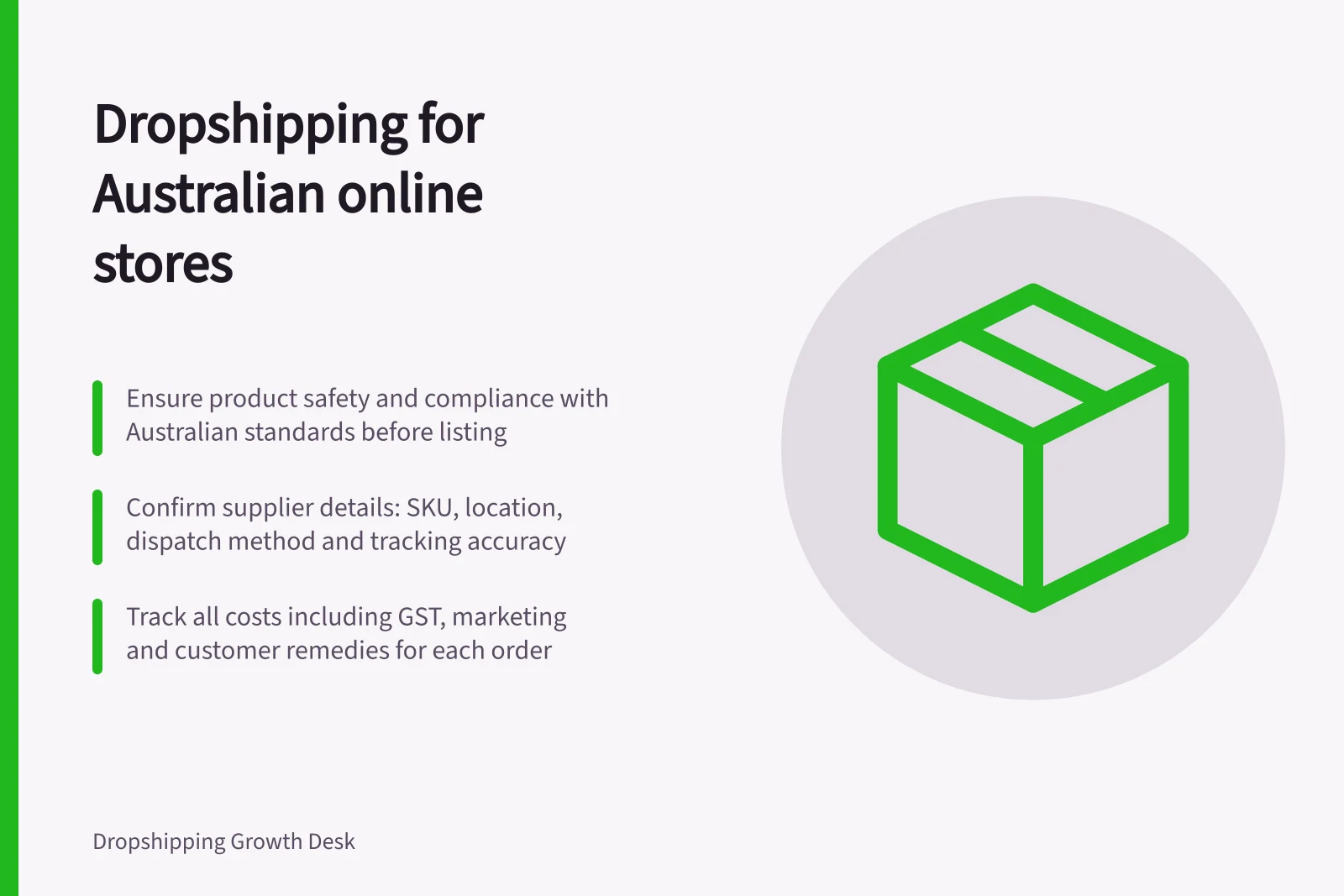
Start with products whose exact variants, contents and dispatch routes can be confirmed. Ask the supplier for the ordering SKU, current availability, fulfilment location and the information it provides after dispatch. A catalogue entry alone does not establish that an item is available or that its description matches what will arrive.
Consider buying wholesale stock when inspecting units or controlling packing and local dispatch would justify the inventory commitment. Compare the full cost and work involved for each product, rather than assuming either fulfilment model will be cheaper.
Before listing an item, check whether an Australian mandatory standard or ban applies. Online sellers must follow product safety laws even when another business holds the stock. Hold a listing if a material safety requirement or essential specification remains unresolved.
If you later learn that a product you supplied was unsafe, stop selling it straight away and communicate with affected customers. Recall and incident notification requirements may also apply.
Set up the supplier handover
Agree on the details needed for each order: exact SKU and variant, quantity, delivery address, shipping service and any instructions the supplier can fulfil. Establish how the supplier will acknowledge or reject an order, confirm dispatch and identify each parcel. Set a contact and escalation route for stock or address problems.
Keep the store order number and supplier reference together. Record when an order was sent, accepted and handed to a carrier. A tracking number created before carrier handover does not, by itself, show that a parcel is moving.
A controlled order can reveal what arrives, how it is packed and when status updates appear. Check it before relying on the handover at higher order volumes, while recognising that one order cannot establish future performance.
Make promises the store can honour
The product page should identify the exact item and give verified details that matter to the purchase, such as dimensions, fit, contents and exclusions. Keep product descriptions, images and delivery claims accurate and based on information you can support. Resolve an important unverified supplier claim before using it in a listing.
Build delivery information from the supplier's handling process, dispatch location and carrier route. Explain when items may arrive in separate parcels. Set out stock availability, where stock is coming from and likely delivery timing clearly for customers. Revisit those details when the supplier changes its stock, warehouse or service.
Provide a visible customer contact route. If a delay becomes known, establish what happened and update affected buyers. If a paid order cannot be supplied, keep the customer informed and discuss the next step.
The ACCC can require businesses to back up claims they make about products or services. Keep the basis for important claims available for review, especially where a supplier's information supports what the store tells customers.
Track costs and exceptions
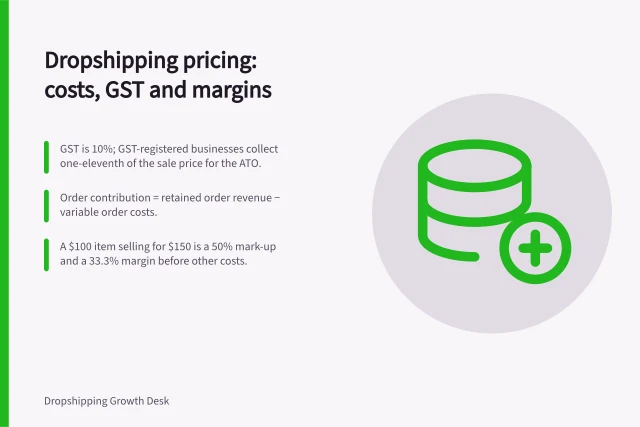
For each order, record the amount retained and the supplier's item and delivery charges. Account for payment costs, marketing, support and expected remedies. The gap between the selling price and supplier item price is not enough to show profit.
Track cash timing as well. Avoiding a purchase of unsold stock does not eliminate supplier payments, advertising costs or customer remedies. Apply a consistent GST treatment in the calculation and confirm the treatment relevant to the business and supply route.
Review exceptions by product and supplier: rejected orders, delayed acceptance, stale availability information, parcels without confirmed handover, repeated product questions and remedies. Compare affected orders with total orders for the same period so changes in volume do not distort the picture.
Correct inaccurate listings and delivery estimates, and pause an offer when availability or safety cannot be established. Handle the customer's remedy independently of any later claim against the supplier.
A useful review separates supplier and store-side problems. Record whether an exception began with availability, order acceptance, dispatch or customer communication, then check whether the same issue recurs across products or suppliers before changing an offer.
The ACCC accepts reports about businesses that may be breaking consumer rules and uses them to inform education, compliance and enforcement work. It does not resolve individual disputes about delayed or failed supply, so the store still needs to manage the customer's issue directly.
Use forecasts to test changes
Cash flow can shift when supplier costs rise or sales fall during a quiet period. Forecast the effect of a pricing or cost change before applying it, rather than relying only on recent order volume.
Use financial reports, such as a cash flow statement, to test the change, and speak to an adviser if needed. If the business has known quiet periods, plan to have enough cash to get through them.
Review costs regularly as they change, then compare the expected margin with the costs the business needs to cover. Government business guidance recommends focusing on the products or services that are most profitable, rather than treating sales growth alone as proof of a sound offer.
In this guide
- Dropshipping versus buying wholesale stockCompare dropshipping with wholesale stock on cash commitment, order control, delivery promises and full per-order cost.
- Choosing products that fit third-party fulfilmentScreen a product for third-party fulfilment using exact item data, dispatch routes, packing needs and a workable remedy path.
- Estimating whether a dropshipping offer can be profitableEstimate a dropshipping offer using per-order contribution, fixed costs, sensitivity checks and completed-order records.